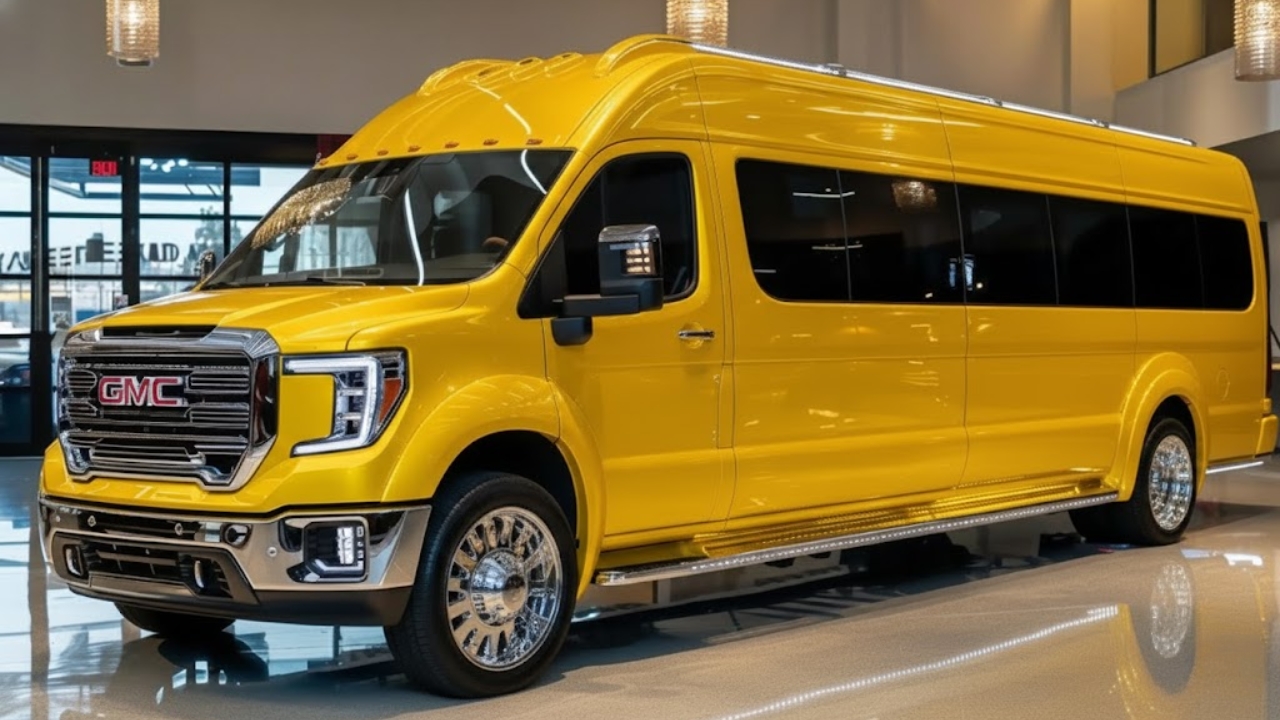
2026 GMC Savana 3500 – A Comprehensive First‑Look Review
The 2026 GMC Savana 3500 arrives as the most capable entry in the full‑size van segment. Built for contractors, fleet operators, and adventure‑seeking families alike, the new Savana blends a rugged chassis with a surprisingly refined cabin. Below is a detailed walk‑through of the design cues, technology, powertrain options, and everyday practicality that define this heavy‑duty workhorse.

Exterior Design
The front fascia keeps the recognizable GMC grille but adds a bolder LED headlamp cluster that stretches into the upper bumper. The bumper itself is reinforced with a steel subframe and includes mounting points for aftermarket accessories such as step plates or winches. Side doors are split into a high‑rising passenger door and a low‑step cargo door, each featuring a recessed handle that reduces snagging when hands are gloved.
Wheel choices range from 17‑inch steel rims for fleet buyers to 20‑inch alloy designs for those who need extra load‑rating and a more premium look. The body panels have been subtly reshaped to lower the drag coefficient, a small but noticeable benefit for vehicles that spend many hours on the highway. Optional exterior accessories include roof racks, side cladding, and a rear cargo awning that folds away when not needed. Paint finishes are offered in traditional commercial colors like “Industrial Gray” and “Deep Ocean Blue,” as well as a series of high‑visibility hues for worksite safety.

Interior and Comfort
Inside, the Savana 3500 strikes a balance between durability and driver comfort. The dashboard is anchored by a large, tilt‑adjustable touchscreen that runs the latest GMC infotainment platform. Materials on the lower dash and door panels are hard‑worn plastics with a soft‑touch coating, designed to resist scratches and chemical exposure.
Seating options start with a two‑tone synthetic leather that is easy to clean, while higher trims can be equipped with optional leather‑trimmed seats that feature lumbar support and power‑adjustment. The passenger side offers a split‑bench that can be folded flat to create a continuous cargo floor, and a rear bench that slides forward to accommodate taller loads. Climate control is managed through a three‑zone system, allowing drivers, front passengers, and rear occupants to set individual temperature preferences.

Storage is generous: a deep center console houses two USB‑C ports and a wireless charging pad, while overhead map lights double as cup holders. Additional cubbies line the door panels, and a reinforced floor panel safeguards heavy equipment from wear.
Infotainment and Technology
Connectivity is a strong point in the 2026 model. The centerpiece touchscreen supports Apple CarPlay, Android Auto, and a built‑in navigation suite that updates traffic data in real time. A suite of USB‑C fast‑charging ports is spread throughout the cabin, and a dedicated wireless charging zone sits on the center console for smartphones.

Audio quality is addressed with an optional nine‑speaker premium sound system that includes a subwoofer mounted under the rear seats. Over‑the‑air updates keep the infotainment software current, and a remote‑app feature allows fleet managers to locate the vehicle, monitor fuel usage, and schedule maintenance alerts from a smartphone.
Powertrain and Performance
The 2026 Savana 3500 is offered with three engine choices. The standard 6.2‑liter V8 gasoline engine produces 410 hp and 460 lb‑ft of torque, delivering strong acceleration even when the van is fully loaded. A 5.3‑liter V8, tuned for higher fuel economy, outputs 355 hp and 380 lb‑ft of torque, suitable for lighter payloads and city driving. The most robust option is a 3.0‑liter turbo‑diesel that pushes 300 hp and an impressive 620 lb‑ft of torque, ideal for towing and uphill climbs.

All powertrains are paired with an eight‑speed automatic transmission that features adaptive shift logic. Rear‑wheel drive is standard, but an all‑wheel‑drive system can be added for customers who need extra traction on slippery or off‑road surfaces. The upgraded cooling system, featuring larger radiators and an oil‑to‑water heat exchanger, maintains optimal engine temperatures during prolonged heavy‑load operation.
Ride Quality and Handling
Despite its size, the Savana 3500 rides with a confidence that belies its mass. A new heavy‑duty suspension setup uses reinforced coil springs in the front and leaf‑spring axles in the rear, tuned to keep the vehicle level when a full payload is present. The steering rack has been re‑engineered for reduced effort, making tight maneuvers in urban environments feel more natural.

Braking is handled by four‑wheel disc brakes with a larger diameter rotor in the front, paired with an electronic brake‑force distribution system that adapts to load conditions. An optional “Tow/Haul” mode adjusts throttle response and transmission shift points to keep the engine in its optimal torque band during towing or uphill climbs.
Safety and Driver Assistance
GMC has equipped the Savana 3500 with a comprehensive suite of active safety technologies. Forward Collision Alert combines radar and camera data to warn of an imminent crash and can automatically apply the brakes if a collision is imminent. Lane Keep Assist helps keep the vehicle centered within its lane, while Lane Departure Warning alerts the driver if the van drifts without signaling.

Blind‑Spot Monitoring covers both sides of the vehicle, and Rear Cross‑Traffic Alert warns of approaching traffic when backing out of a narrow space. A 360‑degree camera system stitches together views from four cameras, giving the driver a bird’s‑eye perspective of the surrounding area. Adaptive Cruise Control maintains a preset following distance on the highway, and a Driver Alert System monitors steering patterns to detect early signs of fatigue.
Practicality and Storage Solutions
The Savana’s cargo area is designed with modularity in mind. The rear floor can be fitted with a set of lockable panels that transform the space into a secure workbench. Optional shelving systems slide in from the sides, allowing tools and equipment to be organized without sacrificing floor space. A set of roof rails supports up to 600 lb of payload, perfect for ladders, solar panels, or roof‑mounted storage boxes.

Side cargo doors open to a height of 78 inches, making loading of tall items straightforward. The rear doors feature a dual‑hinge system that allows the doors to stay partially open, facilitating loading in tight spaces. For long‑haul journeys, an auxiliary 12‑volt power outlet can be installed to run portable fridges, lights, or power tools.
Pricing and Availability
The 2026 Savana 3500 is slated for release in the spring of 2026. Base pricing for the standard V8 model starts at $44,995, including a basic cab‑and‑chassis configuration. The diesel option adds roughly $3,500, while the all‑wheel‑drive package contributes an additional $2,200. Optional equipment such as the premium sound system, leather seats, and advanced safety suite can raise the price into the $55,000‑$62,000 range. Fleet buyers may benefit from volume discounts and a dedicated service program.

Final Thoughts
GMC’s new Savana 3500 manages to retain the utilitarian roots of its predecessors while integrating the technology and comfort expected of modern vehicles. Whether you are a contractor needing a reliable work platform, a fleet manager seeking low‑maintenance durability, or an outdoor enthusiast looking for a conversion base, the Savana offers a solid foundation. Its combination of strong powertrain choices, thoughtful interior design, and extensive safety features positions it as a compelling choice in the heavy‑duty van market.
Frequently Asked Questions
1. What is the maximum towing capacity of the 2026 Savana 3500?
With the turbo‑diesel engine and optional tow package, the Savana can tow up to 12,000 lb. The gasoline V8 models are rated for 10,500 lb.

2. Does the van support a battery‑powered camper conversion?
Yes. An optional 12‑volt auxiliary power outlet and a pre‑wired 110‑volt inverter kit are available, making it easy to install a camper‑style living area.
3. How does the fuel economy compare between the gasoline and diesel engines?
The 5.3‑liter V8 averages about 15 mpg combined, while the 6.2‑liter V8 drops to roughly 13 mpg. The 3.0‑liter turbo‑diesel delivers up to 19 mpg combined, depending on load and driving conditions.
4. Are there any warranty differences for commercial versus personal use?
GMC offers a standard 5‑year/60,000‑mile bumper‑to‑bumper warranty for all models. Commercial fleet customers can purchase an extended service agreement that covers up to 8 years or 120,000 miles.
5. What safety features are standard across all trim levels?
Standard safety equipment includes Automatic Emergency Braking, Lane Keep Assist, Blind‑Spot Monitoring, Rear Cross‑Traffic Alert, and a rear‑view camera. More advanced features like Adaptive Cruise Control are part of optional packages.
Disclaimer: The information provided in this article reflects data released by GMC as of the publication date and is subject to change without notice. Prices, specifications, and availability may vary by region and dealership. Always consult an authorized GMC dealer for the most current details and for personalized pricing.