
Introduction
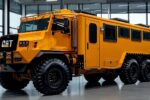
The 2026 Caterpillar Pickup arrives as a bold statement from a brand traditionally known for construction equipment, stepping into the pickup market with a vehicle that feels more like a mobile worksite than a conventional truck. From the moment the chassis is revealed, the emphasis on durability is unmistakable: thick‑gauge steel panels, a reinforced frame, and a suite of engineering choices that prioritize load‑carrying capacity and off‑road resilience. Yet the truck does not sacrifice modern comfort or connectivity; instead, it blends the ruggedness expected from a Caterpillar product with a high‑tech cabin that can serve both a crew on a remote job site and an adventure‑seeking family on a weekend trek. This review walks through the most important aspects of the new pickup, from exterior styling to powertrain dynamics, and assesses whether the machine lives up to the lofty promise of “conquer any terrain, anytime.”
Exterior Architecture
Body Construction
The exterior skin of the 2026 Caterpillar Pickup is built from a proprietary high‑strength alloy that balances weight and impact resistance. The panels are laser‑welded at critical junctions, creating a semi‑monocoque structure that helps distribute forces across the entire body in the event of a collision or a heavy impact with rocks. This approach is reminiscent of heavy‑duty machinery, giving the truck a level of rigidity rarely seen in passenger‑oriented pickups.

Aerodynamics Meets Ruggedness
Despite its boxy silhouette, the vehicle benefits from a series of aerodynamic tweaks that reduce drag at highway speeds. A shallow front spoiler, flush-mounted side mirrors with integrated cameras, and an under‑body diffuser help smooth airflow. These elements do not compromise the vehicle’s high ground clearance or the robust approach and departure angles—both of which exceed 30 degrees, thanks to a long‑travel suspension layout.
Utility‑Focused Features
The exterior is littered with practical accessories:

- Heavy‑duty roof rails that can bear up to 400 kg, ready for solar panels, auxiliary lights, or a roof‑mounted winch.
- A set of modular utility racks behind the cab, allowing quick changes between ladder mounts, toolboxes, or a spare tire carrier.
- Integrated storage compartments with weather‑sealed lids, perfect for protecting power tools and electronic equipment from dust and moisture.
- Protective underbody skid plates made from hardened steel, shielding the drivetrain and fuel tanks from abrupt impacts.
All of these components are bolted rather than welded, making removal or replacement straightforward for field technicians.
Lighting System
LED signature lighting has been pushed to the next level. The front fascia houses a matrix of LEDs that provide up to 12,000 lumens, illuminating the path ahead without blinding other road users. A full‑width LED bar runs along the roof, delivering 360‑degree coverage for night‑time work sites. Rear and side wrap‑around lighting ensure the vehicle remains visible from any angle, a crucial safety feature when operating in low‑visibility environments.

Cabin Layout and Comfort
Modular Seating
Inside, the cabin is designed around flexibility. The bench seat in the front can be folded flat to create a workbench covered with a durable, anti‑slip surface. Rear seating comprises two jump seats that fold upward, revealing additional cargo space. For long‑duration missions, the rear bench can be transformed into a sleeping platform, complete with a built‑in mattress pad and climate‑controlled vents.
Materials and Insulation
Caterpillar chose a blend of reinforced polymer composites and high‑density foam for the interior panels. These materials deliver a sturdy feel while keeping weight low. The cabin walls feature acoustic insulation that reduces engine and wind noise, a surprising benefit given the size of the V8 diesel that powers the base model. The seats are upholstered in a UV‑stable, water‑repellent fabric that can survive both desert heat and Arctic cold.
Climate Control and Filtration
A dual‑zone climate system lets the driver and passengers set independent temperature targets. Integrated air filtration, capable of removing particulate matter down to 0.3 µm, ensures clean breathing air even when operating in dusty construction zones. An optional “remote‑camp” package adds a compact water‑purification unit that can process up to 50 L of water per hour, storing the clean water in a sealed tank beneath the rear floor.
Storage Solutions
Beyond the standard door pockets, the cabin offers hidden storage compartments behind the dashboard and beneath the passenger seat. A large central console includes a slide‑out toolbox that can accommodate common hand tools, while the sidewalls of the cabin are fitted with tether points for securing loose items during aggressive off‑road maneuvers.

Technology Suite
Central Interface
At the heart of the cabin lies a 12.3‑inch ruggedized touchscreen that controls everything from power‑train settings to auxiliary equipment. The interface runs on a customized Linux platform, offering a minimalist layout that can be projected onto a heads‑up display if the driver prefers fewer glances at the screen.
Navigation and Mapping
The navigation system includes topographic maps with contour lines, off‑road trail data, and industrial site overlays. Real‑time satellite connectivity (via a high‑gain antenna mounted on the roof) enables the driver to download updates on road closures, weather alerts, and geological hazards instantly.

Camera Array
A 360‑degree camera suite provides a bird’s‑eye view while navigating tight trails. In addition, a forward‑looking infrared camera helps detect obstacles in low‑light conditions, feeding data to an AI‑driven collision‑avoidance system that can apply brakes autonomously if a sudden obstacle is detected.
Connectivity
Built‑in 5G modem and Wi‑Fi hotspot extend internet access to crew members’ devices. The vehicle also supports Bluetooth Low Energy (BLE) for sensor integration, meaning that external devices such as heart‑rate monitors, gas detectors, or equipment telemetry can be monitored directly from the cabin screen.
Smart Energy Management
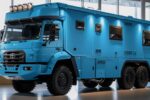
If the buyer selects the hybrid variant, the system intelligently switches between diesel, electric, and solar power. A solar roof array—optional but highly recommended for remote operations—feeds a 20 kWh lithium‑ion battery bank, used to power cabin electronics, tools, and even external equipment through a 230 V AC outlet.
Powertrain Options
Diesel Engine
The standard powertrain is a 7.2‑liter, 16‑cylinder turbo‑diesel delivering 620 hp at 2,200 rpm and a massive 2,150 Nm of torque. The engine features a low‑emission after‑treatment system, complying with Euro 6d standards while still providing the grunt needed to haul 2,500 kg of payload over rough terrain.
Hybrid Variant
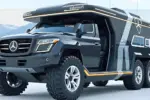
The hybrid version pairs a smaller 5.0‑liter V8 diesel (440 hp) with a 150 kW electric motor integrated into the transmission housing. This setup offers an additional 150 hp and instant torque, useful for low‑speed rock crawling or precise maneuvering in confined spaces. The combined system can operate in pure electric mode for up to 80 km, ideal for silent, emissions‑free work in environmentally sensitive zones.
Transmission
Both powertrains are coupled to an 8‑speed automatic transmission with a lock‑up clutch for the low gear range. The gearbox is reinforced with hardened steel gears and includes a “crawl” mode that limits torque to prevent wheel spin when climbing steep grades.

Fuel and Energy Capacity
A 250‑liter fuel tank offers a claimed range of 1,100 km on diesel alone. The hybrid adds a 20‑kWh battery, which can be recharged via a fast‑charge port (up to 150 kW) or through the solar array, delivering partial recharging while the vehicle is parked under sunlight.
Off‑Road Capability
Suspension
An adaptive multi‑link suspension with eleven independent dampers per axle automatically adjusts stiffness based on load and terrain. When the vehicle detects a sudden impact, the system stiffens to protect the chassis, then relaxes again for comfortable cruising.

Ground Clearance
A variable ride‑height system can raise the chassis by up to 300 mm, providing a total ground clearance of 380 mm. This allows the pickup to clear large rocks, submerged obstacles, and uneven ground without risking undercarriage damage.
Traction Control
Electronic Traction Management (ETM) monitors wheel slip on each wheel individually, distributing torque via an advanced limited‑slip differential. A selectable “rock crawl” mode lowers torque to the front axle while raising it on the rear, helping maintain stability on steep inclines.
Water‑Fording
The sealed electrical components and snorkel intake enable the vehicle to ford water up to 900 mm deep. The air intake filter is positioned high enough to avoid water ingestion, and a pressure‑sealed cabin prevents moisture infiltration.
Safety and Driver Assistance
Active Safety Suite
- Adaptive cruise control with a 200‑meter range, capable of adjusting speed for both highway traffic and off‑road convoy movement.
- Lane‑keeping assist that uses a forward‑facing camera to maintain the vehicle’s position on narrow trails bounded by natural obstacles.
- Blind‑spot monitoring with audible alerts and a visual overlay on the central display.
- Rear cross‑traffic alert, crucial when backing out of tight job‑site parking spots.
Passive Safety
The cabin features a reinforced safety cell made from ultra‑high‑strength steel, designed to absorb impact energy while preserving occupant space. A six‑airbag system includes front, side, curtain, and knee airbags, along with a rear passenger‑focused inflatable seat belt that reduces whiplash in rear‑impact scenarios.
Emergency Tools
An integrated emergency beacon can be activated manually or automatically if the vehicle detects a severe impact. The beacon transmits GPS coordinates via satellite, allowing rescue teams to locate the pickup even in remote wilderness.
Practicality and Versatility
Cargo Solutions
The truck’s bed measures 2,100 mm in length, with a payload rating of 2,300 kg. Integrated tie‑down points are placed every 300 mm, allowing secure fastening of irregular loads. A collapsible ladder mounted on the side eases access to the roof when loading equipment with a hoist.
Power Outlets
Four 12 V and two 230 V AC outlets are distributed across the cabin and bed, powered directly from the battery pack. An onboard inverter can deliver up to 5 kW of continuous power, sufficient to run heavy tools such as compressors or portable generators.
Maintenance Accessibility
Caterpillar engineered the drivetrain and suspension with serviceability in mind. The front subframe can be removed in under two hours using standard hand tools, and all fluid reservoirs are fitted with quick‑change caps, reducing downtime during field servicing.
Pricing and Market Position
The base diesel version of the 2026 Caterpillar Pickup starts at approximately $124,900. Adding the hybrid powertrain and the full suite of optional equipment—solar roof, advanced cabin package, and extended warranty—pushes the price into the $155,000–$170,000 range. Production will be limited to 7,500 units globally during the first two years, with custom configurations available for government, mining, and humanitarian organizations.
Verdict
The new Caterpillar Pickup is not merely a heavy truck; it is a mobile platform that blends the mechanical robustness of industrial equipment with a passenger‑focused cabin. Its combination of high‑output powertrains, adaptive suspension, and an extensive suite of smart technologies makes it an attractive choice for professionals who need a vehicle that can double as a worksite, a base camp, and a reliable transport for personnel and gear. While the price tag may deter average consumers, for those whose jobs demand uncompromising durability and off‑road capability, the 2026 Caterpillar Pickup sets a new benchmark in the heavy‑duty segment.
Frequently Asked Questions
Can the hybrid model operate completely off‑grid without a diesel engine?
The hybrid can run in pure electric mode for up to 80 km, which is sufficient for shortfield operations. However, the diesel engine remains available for longer trips or when the battery is depleted.What is the warranty coverage on the high‑strength steel frame?
Caterpillar offers an eight‑year or 150,000‑km warranty on the frame, whichever comes first, covering corrosion and structural integrity.Is the vehicle compatible with third‑party winches and towing gear?
Yes, the front and rear frames include standardized winch mounting points, and the vehicle’s towing capacity is rated at 7,500 kg when equipped with the heavy‑duty tow package.How does the solar roof affect fuel efficiency?
The solar array primarily powers auxiliary systems and helps maintain battery charge, reducing the load on the alternator and improving overall fuel efficiency by approximately 3–4 % during daylight operation.Can the central touchscreen be used with gloves on?
The screen incorporates capacitive technology with a glove‑friendly mode that can be toggled on via the settings menu, allowing operation while wearing work gloves.
Disclaimer
The information presented in this article is based on manufacturer data, first‑hand impressions, and publicly available specifications as of the date of publication. Prices, availability, and feature sets may vary by region and are subject to change without notice. Readers should verify details with an authorized Caterpillar dealer before making a purchase decision.